ServicesWell Water Filtration
Well Water Filtration and Treatment in Lockhart
Your well is your water supply, and nobody tests it for you. We test it, tell you plainly what we found, and install the filters that fix those problems. No extra equipment, no guessing. Installation is free.
What well filtration is and when you need it
A utility treats its water before it ever hits your pipes. A private well skips that step. Your tap gives you whatever the ground and the pump deliver, and that can shift with the seasons, during a dry spell, or as the well gets older.
Most of the well systems we install deal with one or more of four problems: sand and grit, hard minerals, iron or a rotten egg odor, and bacteria. It is rare for one well to have all four. So we test first and build the system from the results. If a sediment filter is all your water needs, we will tell you that and stop there.
What you get with a well system
- Testing comes first
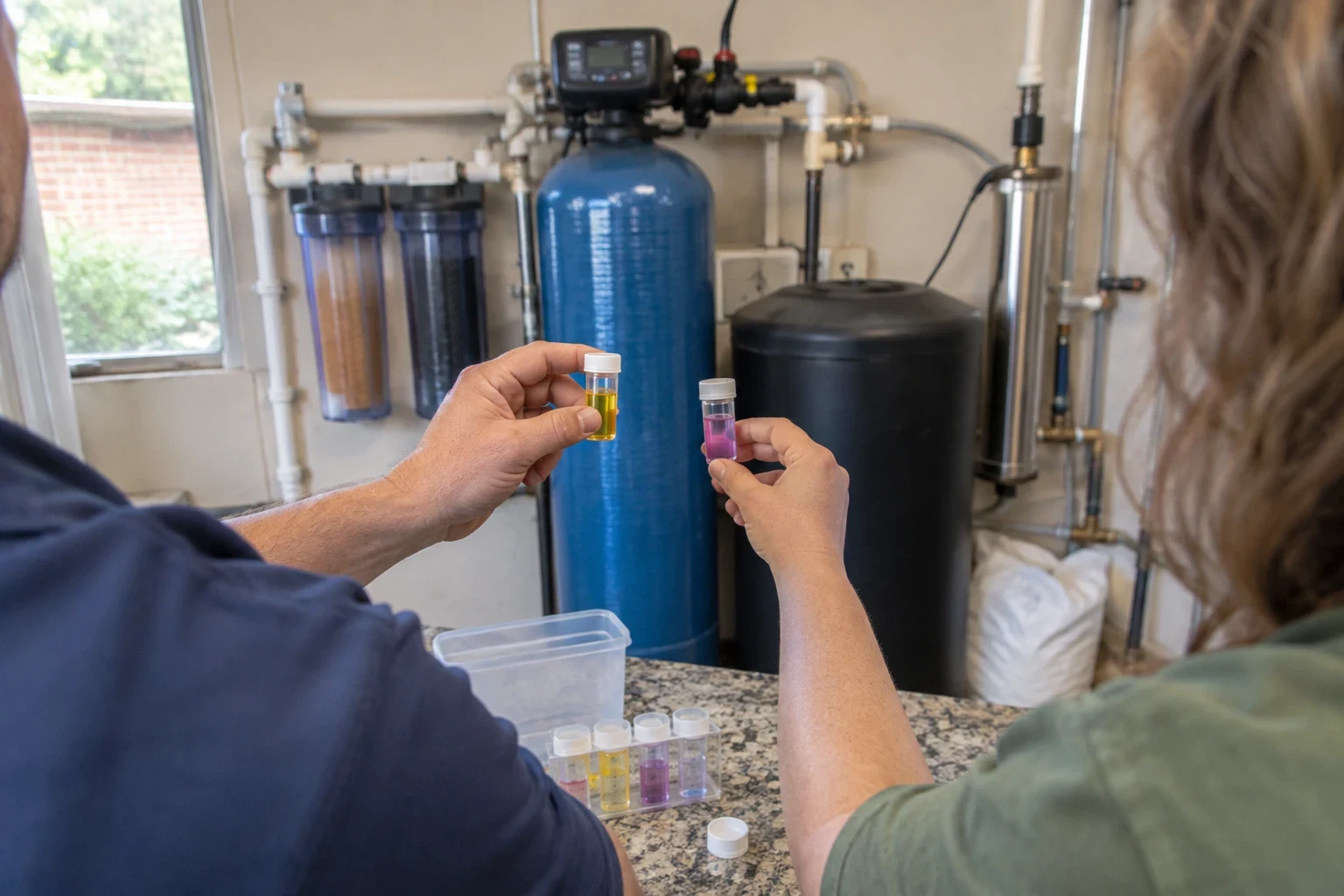
- Before we recommend a single part, we look at hardness, iron, pH, sulfur odor and a few other basics. If bacteria is a worry, we explain how a lab sample works and what the report will tell you.
- Sediment filtration
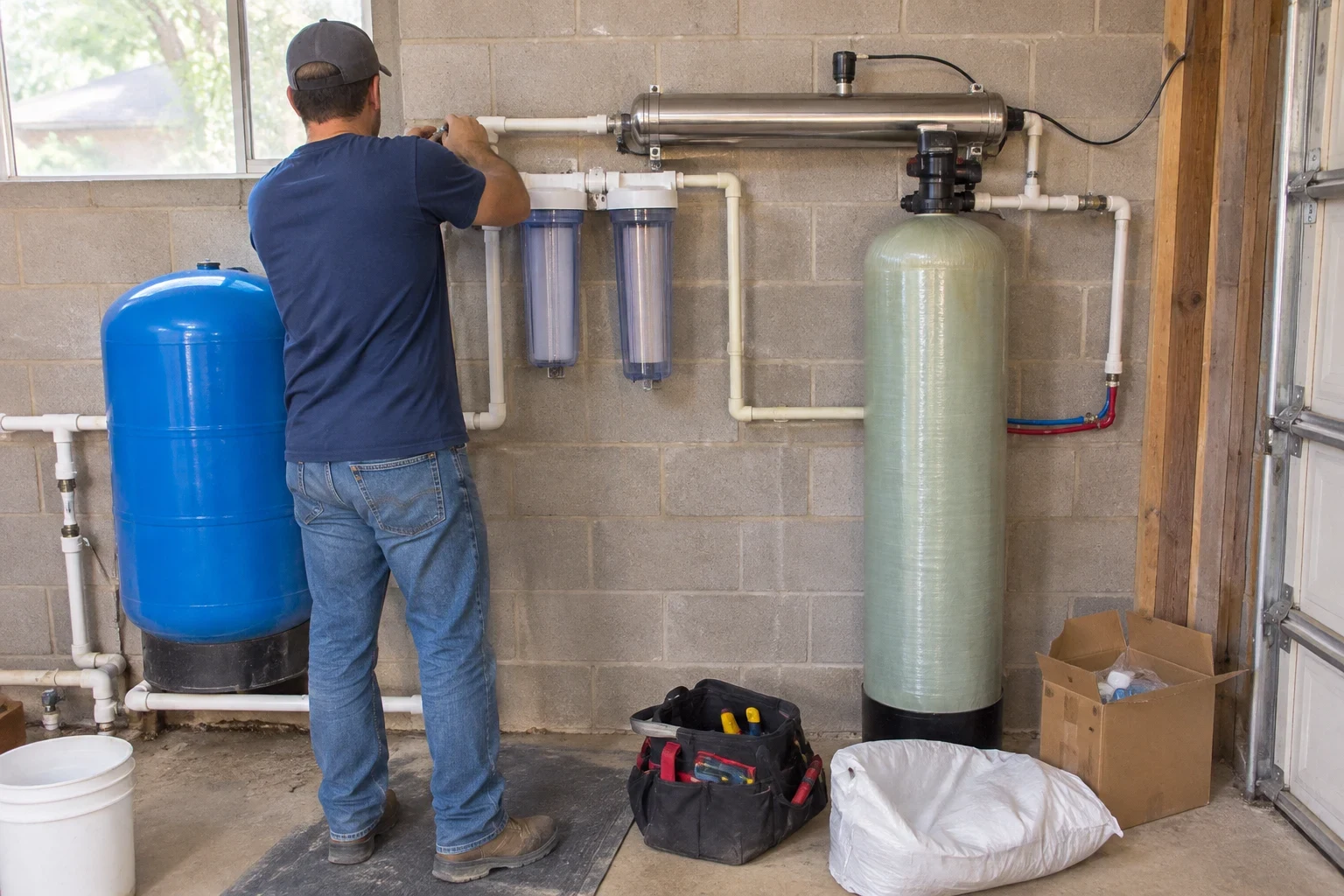
- A spin-down or cartridge filter goes in just after the pressure tank to catch sand and grit. It guards every fixture and appliance past that point, plus any other equipment we add.
- Treatment that matches your results
- Based on the test, that could mean a softener, an iron and sulfur filter, a carbon filter for taste, or a UV light for bacteria. If your results do not call for a stage, we leave it out.
- A tidy install at the pressure tank
- We add bypass valves so the system can be serviced while your home keeps running water. Installation is free.
- A walk-through at the end
- We point out each filter, show you how to bypass it, and go over what needs replacing and about how often.
Signs your well water needs filtering
Orange or brown stains
Rust marks in toilets, tubs and on laundry usually mean iron. It also coats the inside of pipes and water heaters over time.
Rotten egg smell
That is usually hydrogen sulfide. It is often worse with hot water or after the water sits overnight.
Grit in faucet screens
Sand or silt clogging aerators and showerheads points to sediment. It wears out valves and appliance parts faster than you would expect.
White crust and spotty dishes
Hard minerals leave scale on fixtures and inside your water heater. Soap also stops lathering well.
Cloudy water or a recent flood
If the well head took on surface water, or the water looks different than it used to, get it tested before you drink it.
You have never tested it
Plenty of wells look and taste fine. A test is the only way to know.
How a well filtration job runs
- 1
Free test at your home
One phone call gets a visit on the calendar. We test the water right at your home and go over what we found in everyday words.
- 2
Straight quote
We lay out what we would put in, why each piece is there, and what it does. If something you asked about is not needed, we tell you.
- 3
Install day
Most systems go in at the pressure tank or where the water line comes into your home. The water is off for part of the visit, and you will know how long before we start.
- 4
Flush and check
We flush the new equipment, check pressure at a faucet, and test the water again so you can see the difference for yourself.
- 5
Cleanup and walk-through
We take away the boxes and any old parts, then show you how filter changes are done.
What moves the cost
There is no single price for well filtration because no two wells test the same. The test results set most of the cost. Installation itself is free, so what you pay for is the equipment and its upkeep.
- How many problems the test finds
- A well that only needs sediment filtering costs far less than one with iron, hardness and bacteria together. Each stage adds equipment.
- Iron and sulfur levels
- Light iron can be handled by a softener. Heavier iron or strong sulfur odor needs a dedicated filter, which costs more.
- Water use and flow
- A bigger household or a strong pump needs larger tanks and filters so pressure does not drop when two showers run.
- Space and plumbing at the tank
- Tight spaces, old fittings, or long runs to where the line enters your home can add parts.
- Ongoing upkeep
- Cartridges, salt, and UV bulbs all need replacing. We give you those costs up front so there are no surprises.
Well filtration questions
Something not covered here? (512) 710-1976
Do I really need a test first?
Yes. Iron, hardness and bacteria each take a different fix, and the wrong equipment can make one problem worse. The test is free, and it keeps you from paying for parts you do not need.
Will a filter make my well water safe to drink?
That comes down to what is in the water. Sediment and iron filters clean the water up, but they do not kill bacteria. If bacteria turns up, a UV system is the usual answer, and we will walk you through that once the results are in.
Is the rotten egg smell coming from my well or my water heater?
Smell a cold tap, then a hot one. A smell that comes only with hot water often starts inside the water heater tank. When both taps smell the same, the sulfur is most likely in the well water before it reaches the heater. We check both when we test.
Will a filter system lower my water pressure?
Not if the equipment fits your pump and the way your home uses water. When pressure does fall off, the usual causes are tanks that are too small or cartridges left in too long. We size the system around your pump and your household so two showers can run without a struggle.
Do you work on wells outside Lockhart?
Yes. We also work in Luling, San Marcos, Kyle, Buda, Cedar Creek and Redwood. The test and the install run the same way in each place.
Find out what is in your well
One phone call gets you a free water test and a quote built on the results. We tell you what you need and what you can skip.