ServicesWater Testing & Analysis
Water Testing & Analysis in Lockhart
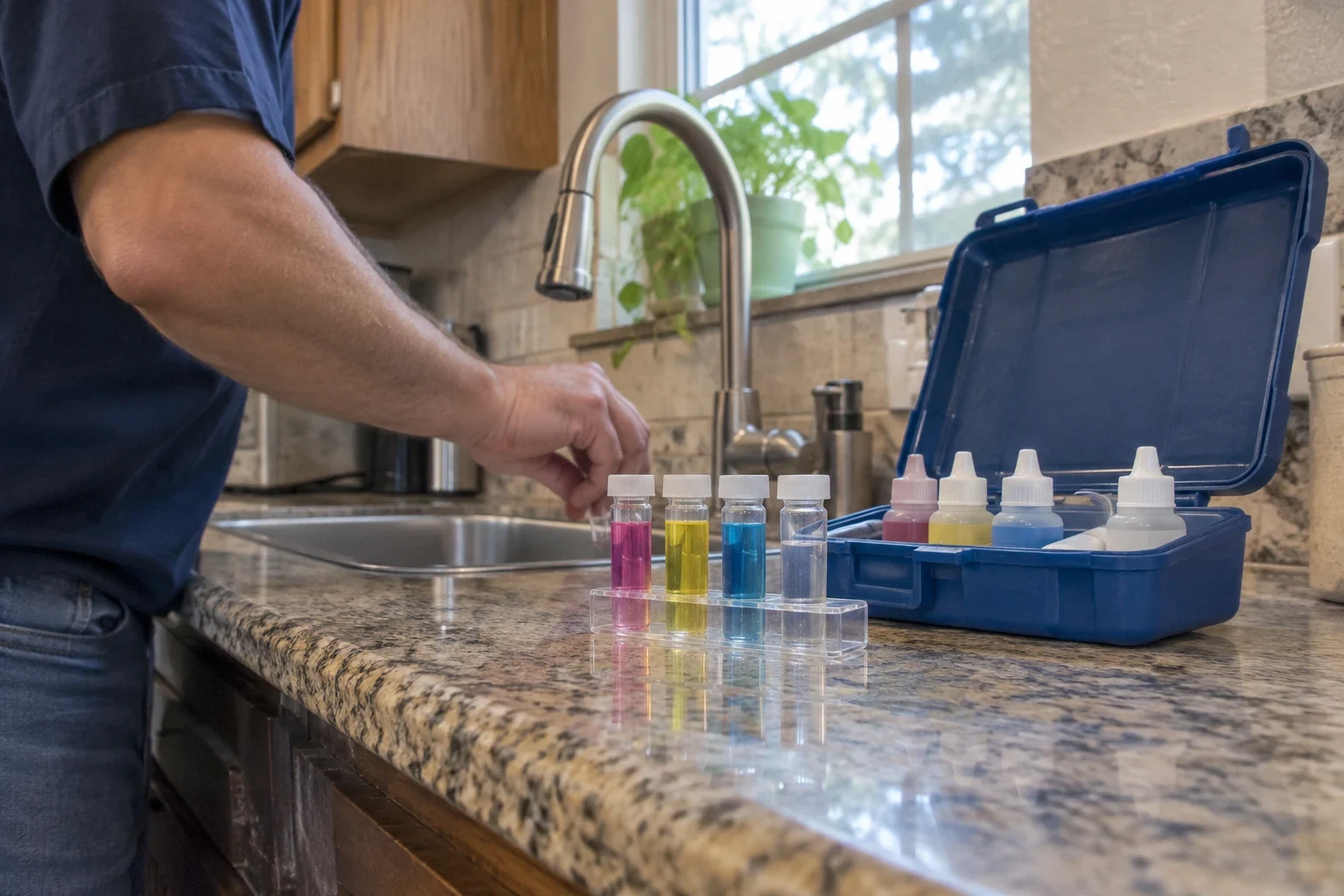
We test the water in your home and walk you through the numbers on the spot. Hardness, iron, chlorine, pH and dissolved solids. Then you get a straight answer about what, if anything, is worth fixing. The basic test is free.
Know What's in Your Water Before You Buy Anything
Most people call us because something is off. Spots on the glasses, a smell from the shower, a crust on the faucet. A test tells us the cause, and the cause tells us the fix. Without it, you are guessing, and guessing usually means buying more equipment than you need.
Our answer is not always a system. Sometimes the water is fine and the problem is an old water heater or a fixture. Sometimes a simple carbon filter is enough. We will tell you which, and why.
The city's annual water quality report covers the water leaving the plant. It does not cover what happens in the pipes between the street and your tap. Our test does.
What We Check
- Hardness
- We read calcium and magnesium in grains per gallon. That figure tells us whether a softener, a salt-free water conditioner or neither is worth it.
- Iron and manganese
- A small amount of either can stain sinks and toilets orange or black. We test for both because each one needs its own treatment.
- Chlorine
- City water gets chlorine to keep it safe, and it causes most taste and odor complaints. We measure how much reaches your tap.
- pH and dissolved solids
- Water with low pH can wear away copper pipe over the years. High dissolved solids often account for flat or salty taste, and that points to reverse osmosis for drinking water.
- Smell check
- A rotten-egg smell is usually sulfur. We note whether it comes from the hot side alone or both sides, since that shows whether the source is the water or the water heater.
- Lab work when it's needed
- Lead from older pipes and bacteria can only be measured by a real lab. When your concerns call for that, we go over the choices and take the sample properly.
When a Water Test Makes Sense
Chalky buildup on faucets
That hard white film on showerheads, faucets and glass doors comes from minerals in the water. Testing shows how much is there, and that number points to the right fix.
Rings in the tub or toilet
Orange or brown stains usually mean iron. Dark streaks can mean manganese.
Odd taste or smell
A pool smell, a metal taste and a rotten-egg odor each come from something different. Pinning down which one keeps you from paying for the wrong filter.
Older plumbing
If your pipes are old or you don't know what they are, testing for lead is a sensible move, more so with kids at home.
New to the house
You can't be sure how the previous owner handled the water, or whether a leftover system still works. Testing gives you a baseline.
A sales pitch with no numbers
If someone quoted you equipment without testing your water first, get the readings before you commit.
What Testing Costs
The in-home test is free. You pay nothing for the visit, the readings or our explanation of them. Money only enters the picture if you want lab work or choose to treat your water, and you hear the price before anything happens.
Lab panels
Lead, bacteria and long contaminant lists have to go to an outside lab. What you pay depends on the panel you pick.
How many samples
One tap is simple. Sampling several taps, or checking water before and after a system you already own, means more lab samples.
What the readings show
If you decide on a system, the price follows what needs to come out of the water and how much water your home goes through. Treating one drinking water tap runs less than treating every faucet in the house.
Installation
Installation is free on any system you buy from us. Your quote is for the equipment itself, with no separate labor line.
How a Test Visit Goes
- 1
You call us
Describe the problem, whether it's a smell, stains or a taste, and when it started. We pick a time that fits your day.
- 2
We test at the tap
We draw water from the kitchen and usually one other tap, often ahead of any filter you already have. Most tests take about half an hour, and your water stays on the whole time.
- 3
We go over the numbers
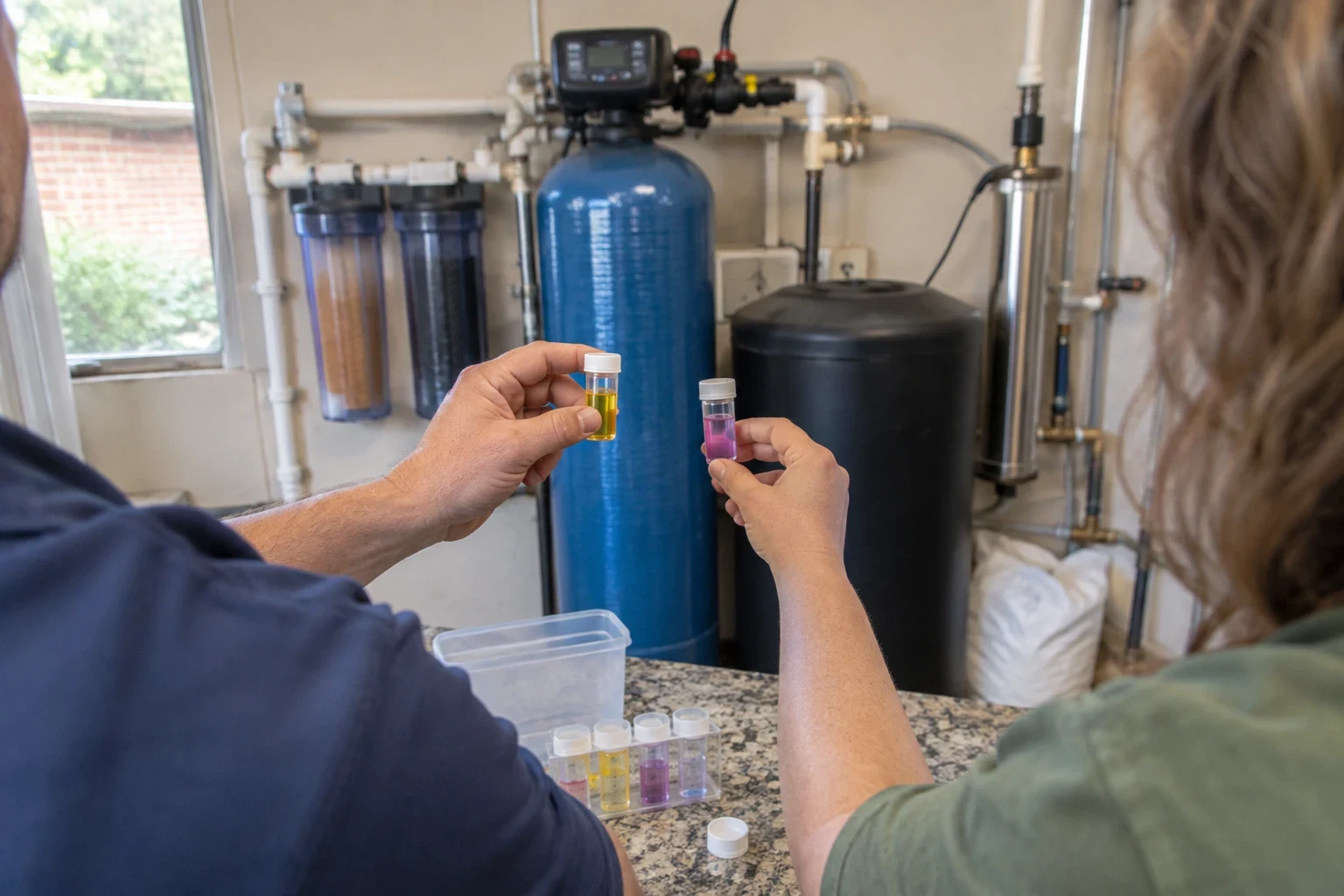
You see each reading and hear what it means in plain words. We point out which results are normal and which are not.
- 4
You get options, or none
If treatment makes sense, we lay out the choices, from whole-home filtration to a drinking water system, and give you a quote. If your water is fine, we tell you that and head out.
Questions About Testing
Does the water test actually cost nothing?
It does. There is no charge for the in-home test or for us explaining the results. Lab panels for lead, bacteria and similar items are billed separately, and you hear the price before any sample goes out.
Will the test turn into a softener pitch?
Only when your readings point to one. Lots of homes need just a carbon filter, or nothing. We show you each number, tell you what it means and leave the decision to you.
Why not just read the city's water report?
That report describes water as it leaves the treatment system. Your pipes, your water heater and any aging filter can change it on the way to your glass. We test what your tap actually delivers.
Does someone have to be home?
Yes. We need access to the kitchen sink and at times a bathroom or the water heater. Being there also means we can walk through the results with you on the spot.
Isn't a test strip from the store just as good?
Strips give a ballpark hardness or chlorine number. They do poorly with iron, pH and dissolved solids, and they can't explain why a reading is high. Our test is more precise and comes with an explanation.
Find Out What's in Your Water
One short visit and you will know whether your water needs work. If it does, you get a quote with the options laid out plainly. We cover Lockhart and towns nearby like Luling, Kyle and Buda.