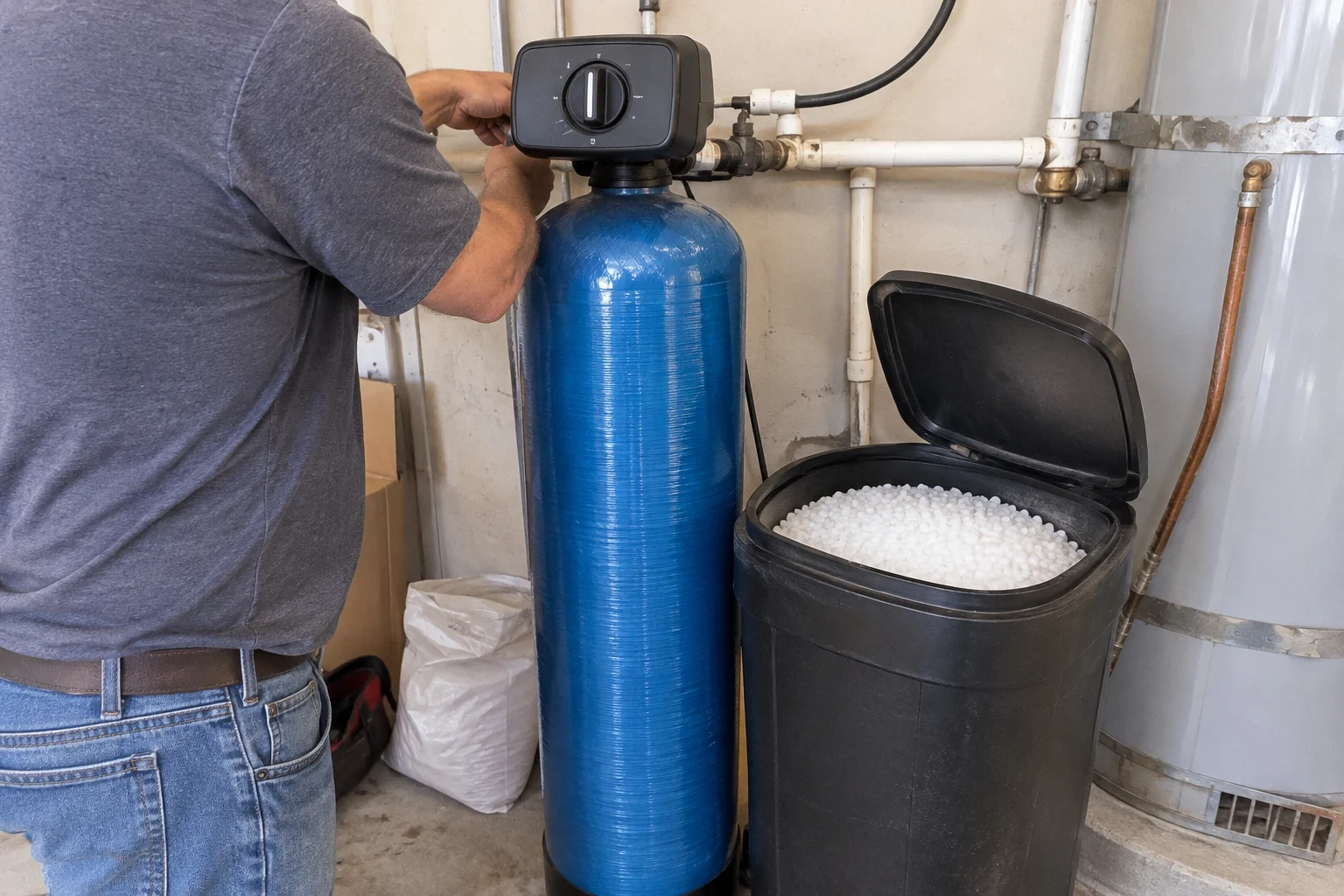
ServicesWater Softener Installation
Water Softener Installation in Lockhart, TX
Before we talk equipment, we measure how hard your water really is. We size the softener to that number and to how many people live under your roof. If a softener isn't the right fit, you'll hear that from us, along with what is. Installation is free, and you see the quote first.
How Softening Works and Who Needs It
Hardness comes from calcium and magnesium dissolved in your water. Heat it or let it dry on a surface and those minerals turn into scale. You see it as crust on faucets and haze on shower glass. You don't see the layer forming inside your water heater.
A softener pulls those minerals out with a bed of resin beads. As water flows through, the beads grab the calcium and magnesium. On a schedule, the unit washes the beads with salty brine and sends the minerals out the drain line. Every tap in your home then gets softened water.
Plenty of Central Texas water runs hard, but the level changes from one home and supply to the next. That's why we measure it and show you the result. When the reading is on the mild side, a salt-free water conditioner or whole-home filtration may be enough with less upkeep, and we'll say so before you buy anything.
What You Get With the Install
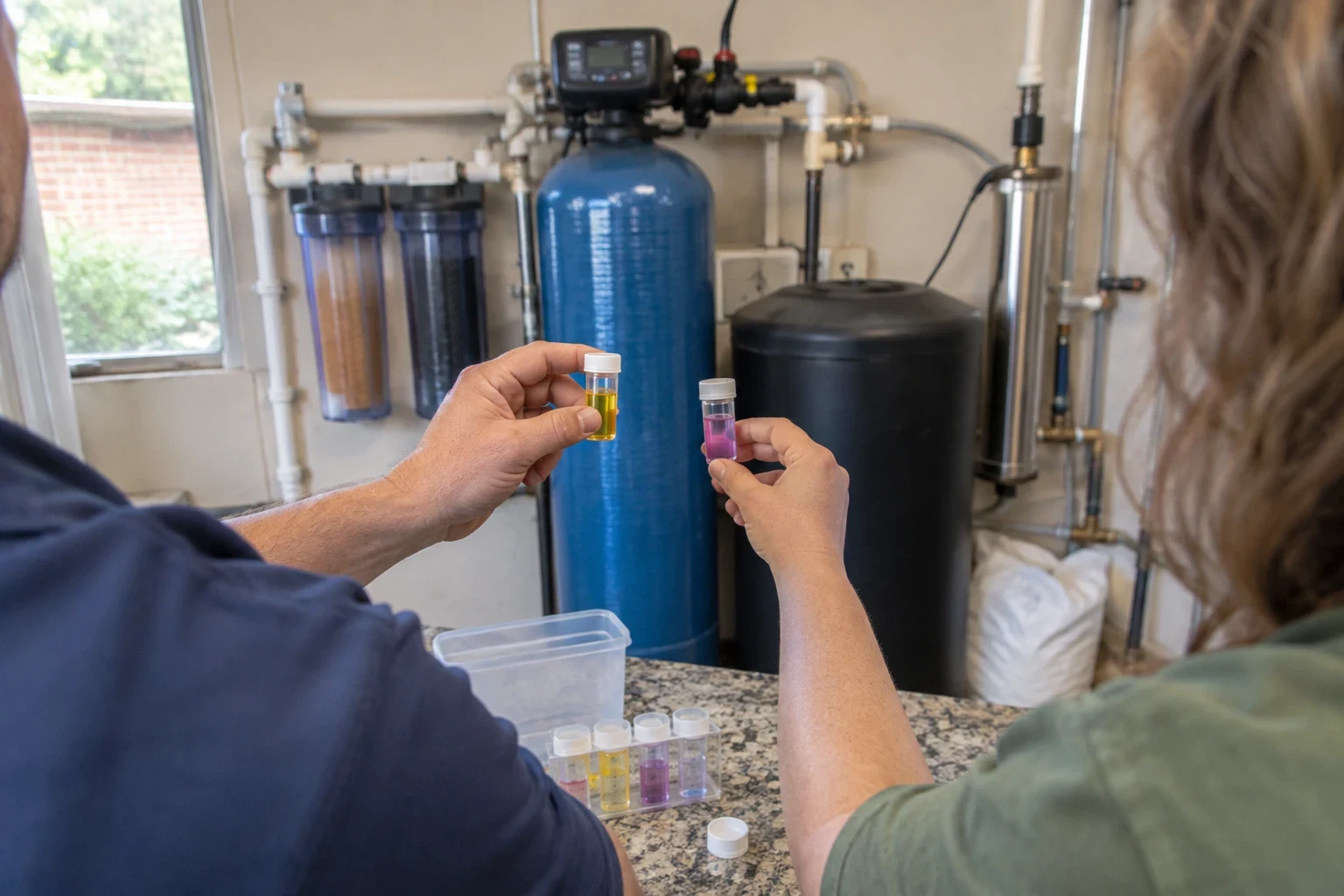
On-site hardness reading
We check hardness right at your faucet and look for iron, since iron changes which softener makes sense. You get the numbers before any talk of equipment.
A unit sized for your house
We match grain capacity to your hardness and the size of your household. An undersized unit regenerates over and over. An oversized one is capacity you paid for and never use.
Bypass valve and tie-in
A bypass valve goes in where the softener meets your main line. Turn the handle and the unit is out of the loop while your taps keep running. If you like, we leave the outside spigots on unsoftened water to save salt.
Drain line and brine tank
We run the regeneration line to a drain with a proper air gap. Then we set the brine tank, put in the first bags of salt and program the valve.
A quick lesson and cleanup
Before we go, we show you how to add salt, how to flip the bypass and how to read the display. The work area gets cleaned up.
Signs You May Need a Softener
- Crusty faucets and showerheads
- White buildup forms on aerators, showerheads and drain rings. You clean it, and a few days later it's back.
- Cloudy glasses and shower doors
- Dishes leave the dishwasher with spots and a dull film. Glass shower doors get a haze that scrubbing doesn't remove.
- Soap that barely suds
- Minerals keep soap and shampoo from lathering, so you use more. Your skin and hair may feel dry or sticky after rinsing.
- A water heater that pops or rumbles
- Those sounds from a tank heater usually come from mineral scale collected in the base. The heater then burns more energy to get water hot.
- Appliances wearing out early
- Mineral coating clogs and wears down parts in dishwashers, washers and coffee makers, so they quit sooner than they should.
What Happens, Step by Step
- 1
Call and test at your home
Give us a ring and pick a time that works. We come out, test your water at the tap and give you the hardness reading. You also get a plain yes or no on whether a softener is the right move.
- 2
Quote in writing
If it is, the quote names the softener, the parts and any added plumbing. We don't tack on charges later without asking you first.
- 3
Installation
Most jobs wrap up in a few hours to half a day. Your water stays on except for the short stretch when we tie into the main line. We lay down drop cloths and keep the work to your garage or utility room.
- 4
First run and final test
We start a regeneration cycle and test the water coming out to confirm the hardness has dropped where it should. Then we show you how the unit works.
What Sets the Cost
We don't charge for installation, so the price is mostly the softener itself plus any plumbing your home needs to make it fit. A few things push that number up or down. You get the full breakdown in your quote, by phone or right after the test.
- How hard the water is and how many use it
- More minerals and more people call for more grain capacity. That means a larger tank with more resin inside, and a higher price.
- Iron showing up in the test
- Iron coats and clogs standard resin over time. A reading with iron may point to a softener made to handle it, or an iron and sulfur removal stage installed before the softener.
- Getting to the main line
- A plumbing loop already sitting in the garage keeps things simple. A buried or awkward line, or no drain close by, means more pipe, more fittings and more labor on parts.
- Extra equipment you choose
- Some people add a carbon filter for chlorine taste or a reverse osmosis system under the kitchen sink. We list those on their own lines so you can say yes or no to each.
Common Softener Questions
- Will a filter fix hard water, or do I need a softener?
- Your test decides it. A standard filter handles taste and odor issues like chlorine, but it leaves calcium and magnesium in the water. When the hardness reading is low, whole-home filtration or a salt-free water conditioner can be the better buy. We'd rather you spend once on the right thing.
- How often will I be buying salt?
- Three things set it: your hardness reading, how many gallons your household runs through each day and how the valve is programmed. A unit that regenerates based on gallons used burns through less salt than one running on a set timer. We program yours that way and show you where to check the level.
- Does softened water taste salty?
- Most people can't tell. The softening process does leave a little sodium behind in the water. If you'd like your drinking water without it, a reverse osmosis system at the kitchen tap takes it out.
- Do you actually install it for free?
- Yes, installation is free. What you pay for is the softener and any extra plumbing parts your setup needs. Every one of those items is spelled out in the quote before we start.
- What do I have to do to keep it running?
- Keep salt in the brine tank. Now and then, look for a hard shell of salt across the top, called a bridge, and break it up so brine can form. We point it out on install day so you know what it looks like.
Find Out How Hard Your Water Is
Start with a free water test at your home. We serve Lockhart, Luling, San Marcos, Kyle, Buda and nearby, and you will know your options before you spend anything.