ServicesIron and Sulfur Removal
Iron and Sulfur Removal in Lockhart
Rust-colored stains and a rotten-egg smell have causes you can measure. We test your water, tell you what is behind it and what will fix it, and install a filter sized to your numbers. Installation is free.
What iron and sulfur removal does
Iron leaves orange and brown stains on sinks, tubs, toilets and laundry. Sulfur, in the form of hydrogen sulfide gas, makes water smell like rotten eggs. Both can show up in the same water, and both can build up inside pipes, fixtures and appliances over time.
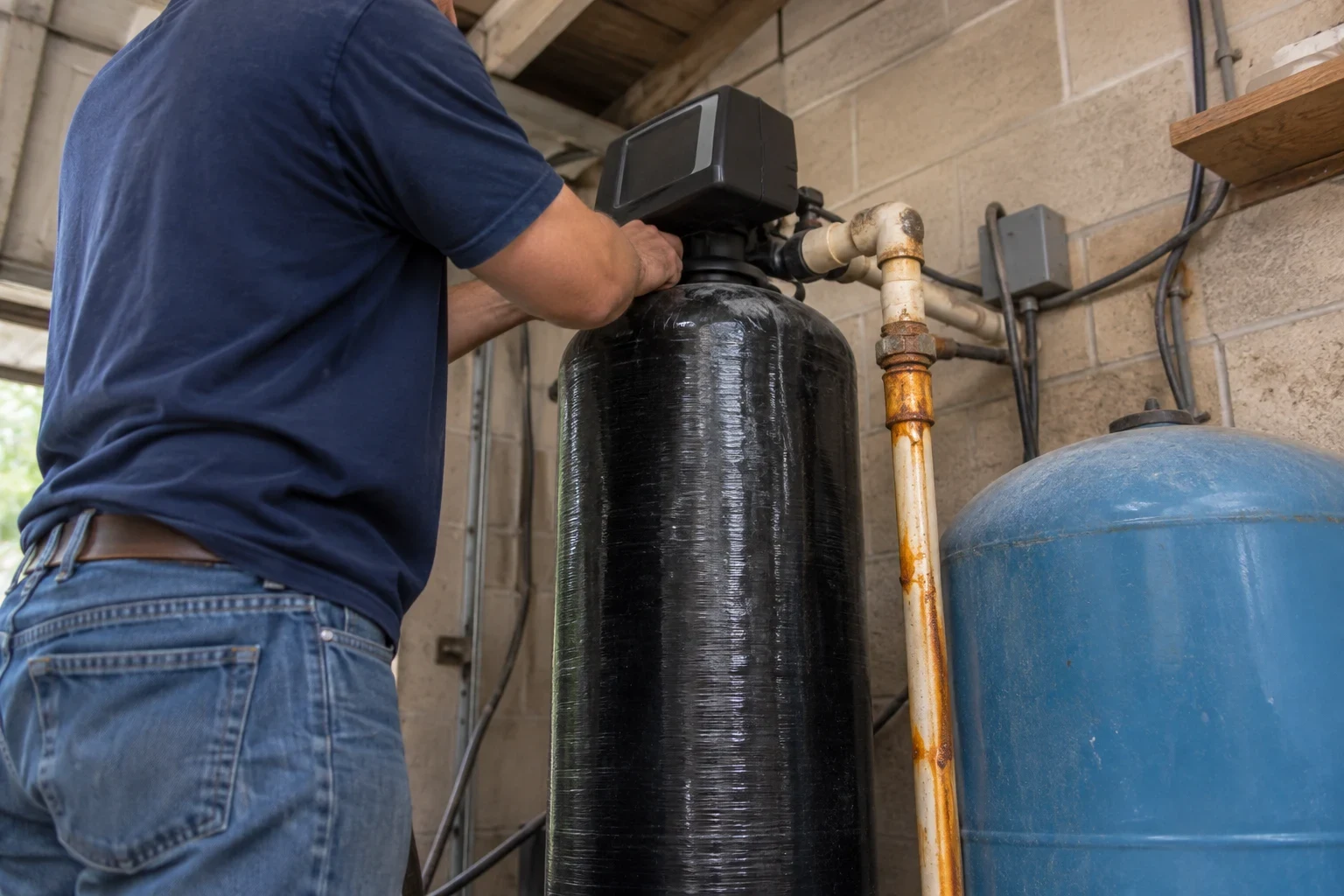
Iron and sulfur removal means a filter at the point where water enters your home that changes these into solids, traps them and flushes them down a drain on a set schedule. You get clear water at every tap, not just the kitchen.
Here is the straight answer up front: not every bad smell needs a filter. If the odor only comes from the hot water, the cause is often the anode rod in your water heater, and we will tell you that before we sell you anything. We do this work in Lockhart and nearby towns like Luling, Kyle and San Marcos.
What you get with the job
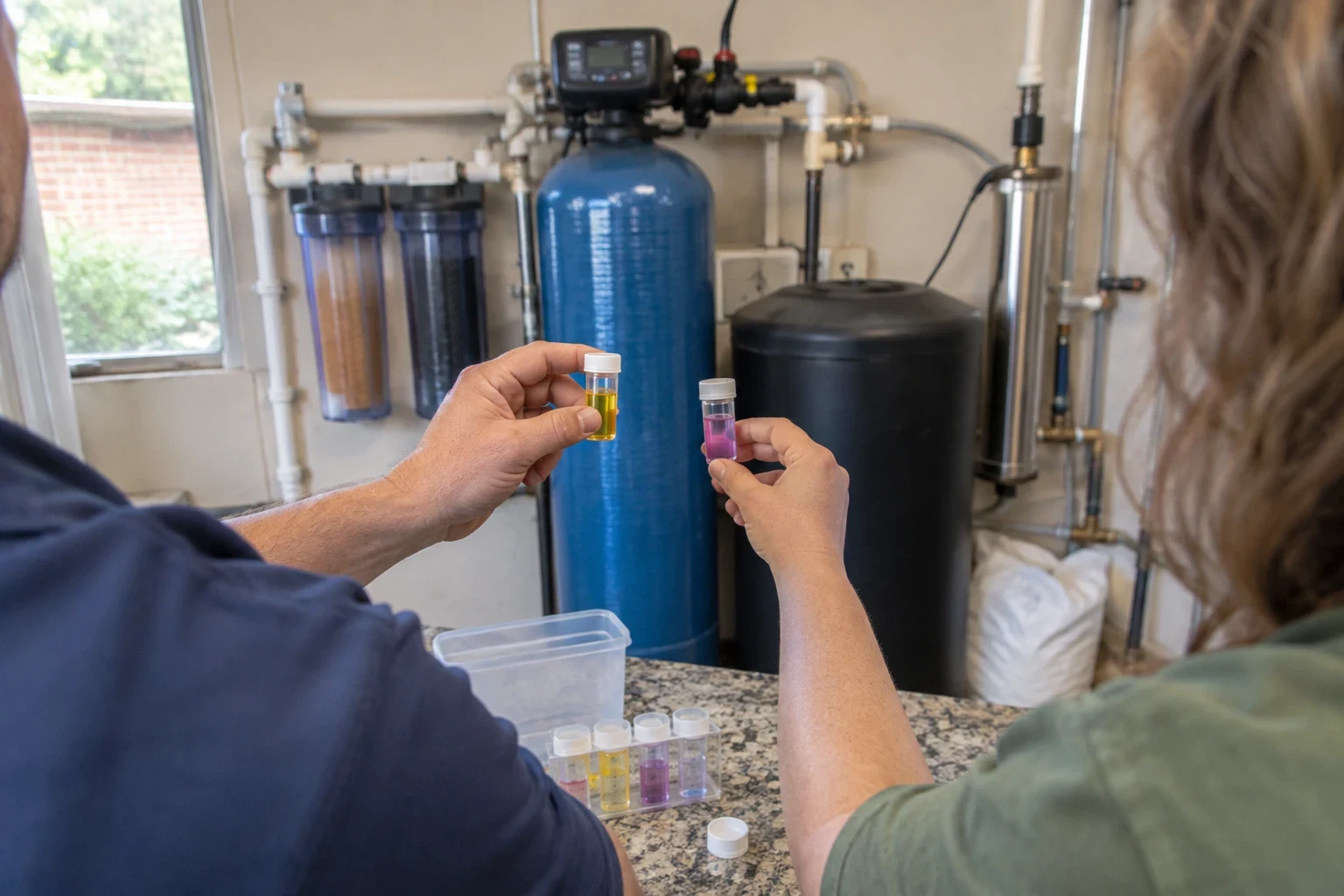
Water testing at no charge
We measure iron, hydrogen sulfide, manganese, pH and hardness. Those readings show which system will work and which would be money wasted.
A filter matched to the problem
Moderate iron and sulfur are usually handled by an air injection filter. Strong sulfur can call for a small chemical feed plus a contact tank. A faint odor may only need catalytic carbon.
Installation at no cost
We tie the system into your main line, fit a bypass valve so it can be shut off for service and route the backwash line to a proper drain. Installation is free.
Backwash timing set for your home
We set the self-cleaning cycle from your iron reading and your household's water use. Run it too rarely and it clogs. Run it too often and water goes to waste.
A tour of the system
Before we go, we point out the bypass, the control head and how things look when the filter is running right, so you can spot trouble.
How to tell iron or sulfur is in your water
- Rust-colored marks
- A ring in the toilet, streaks below the faucet and marks that return a week after you scrub them are classic iron signs.
- A smell like rotten eggs
- When cold taps smell of sulfur, hydrogen sulfide is in the supply. When only hot taps smell, look at the water heater first.
- Laundry turning yellow
- White clothes go dull or pick up a rusty tint. Bleach only sets the iron deeper into the cloth.
- Water that changes in the glass
- If clear water turns orange as it sits, the iron is dissolved. If it pours out cloudy or red, the iron is already in solid form.
- Slimy film in the toilet tank
- Red or brown gel inside the tank can point to iron bacteria. We test for it because it changes how the water is treated.
- Dark specks or black stains
- This is often manganese. It tends to show up with iron and is handled by the same kind of filter with slightly different settings.
How a job goes
- 1
You call, we set a test
Call us and we schedule a free water test at your home. It takes about half an hour.
- 2
We explain the results
We go over the numbers with you in plain terms: what is in the water, where it likely comes from, and which options make sense. If a cheaper fix like a water heater anode swap will solve it, we say so.
- 3
You get a quote
We quote the equipment by phone or in person, with the parts listed. You decide on your own time. No pressure to sign that day.
- 4
Install day
Plan on the crew being there for a few hours. We shut off your water only while we tie into the main line. Drop cloths go down in the work area, and we take the boxes and old fittings with us.
- 5
Check and handoff
We run a backwash, test the treated water and show you the controls before we leave.
What moves the cost
The price comes down to the equipment your water needs. Installation is free, so most of what you pay for is the system itself. We give you a firm number after the test, not before.
- Iron and sulfur levels
- Low levels can be handled by a simpler filter. High levels need a larger tank or a chemical feed with a contact tank.
- Type of iron
- Dissolved iron, solid iron and iron bacteria each call for a different approach. Bacteria usually adds a disinfection step.
- Water use and flow
- A home with four bathrooms needs a bigger filter than a two-bedroom house, or the pressure drops when two showers run.
- pH and other minerals
- Low pH slows the reaction that removes iron and may need correcting. Hardness or manganese can mean a second piece of equipment, like a water softener.
- Space and drain access
- The filter needs room near the main line and a drain for backwash. A tight spot or a long drain run adds parts.
Questions about iron and sulfur
- Will a water softener take out iron?
- Only a little dissolved iron. Beyond that, the iron coats the resin and the softener loses its punch. For anything above a low reading, an iron filter placed before the softener works better.
- Why do only my hot taps smell like eggs?
- Most often the magnesium anode rod in the water heater is reacting with your water. Changing to another type of anode often solves it, and we check for this before suggesting any filter.
- Are iron and sulfur harmful?
- At typical household levels they are mainly a nuisance: stains, odor and an unpleasant taste. Over time they do wear on fixtures and appliances. If the test finds iron bacteria, we will discuss whether disinfection is worth adding.
- What upkeep will the filter need?
- Air injection filters largely clean themselves by backwashing. Chemical feed systems need their solution refilled on a schedule. We spell out what your system needs and how often.
- Will my existing stains disappear?
- No. The filter prevents new stains but won't remove old ones. After the water is treated, a rust stain cleaner usually clears the fixtures, and the marks stay gone.
Learn what your water is carrying
We test your water free, explain what is behind the smell or stains and give you a plain quote. If you move ahead, installation costs nothing.