ServicesReverse Osmosis
Reverse Osmosis Systems in Lockhart
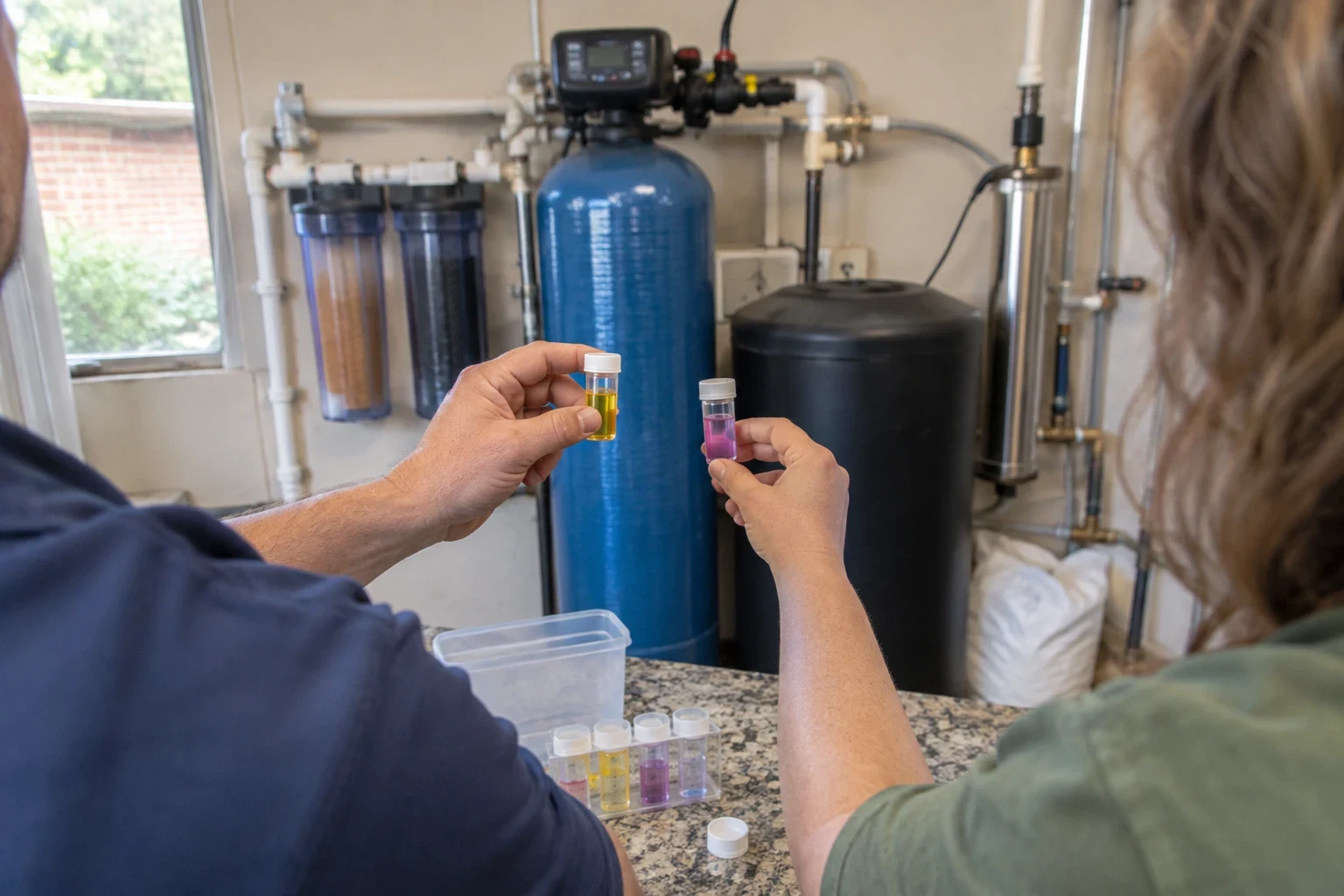
A reverse osmosis unit tucked under your kitchen sink feeds a separate tap with water for drinking and cooking. Before we quote, we test what comes out of your faucet and tell you plainly whether RO is worth it. Installation costs you nothing.
How RO works and who it suits
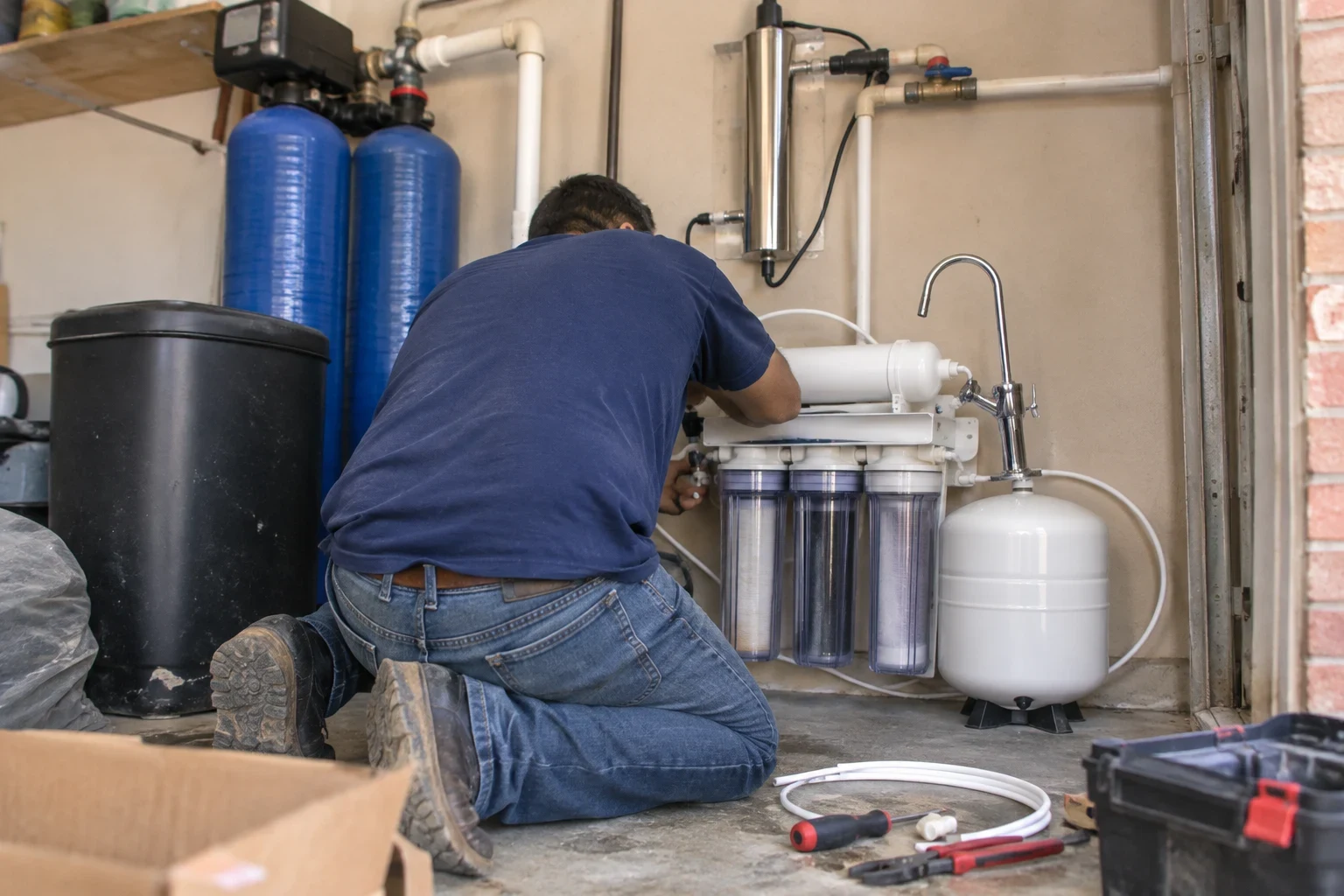
A reverse osmosis system forces water through a membrane with openings far too small for most dissolved contaminants. Lead, nitrates, arsenic and fluoride get held back, along with the salts and minerals that give water a stale or bitter edge. That reject water rinses away to the drain. The filtered water waits in a compact tank and comes out of its own faucet.
RO works at a single tap. It cleans what you drink and cook with, not what runs through the shower, dishwasher or laundry. For scale on fixtures or a chlorine smell in every room, Whole-Home Filtration or Water Softener Installation is the better fit, and either one can run alongside RO.
Put simply, RO makes sense if you want the cleanest water your kitchen can give you, if a test turned up something you would rather keep out of your glass, or if you are done carrying cases of bottled water in from the car.
What you get with an RO install
- A test before any quote
- We check hardness, total dissolved solids and chlorine at your kitchen faucet. Those numbers tell us which prefilters you need and how much work the membrane will be doing.
- Prefilters and the membrane
- Water hits a sediment stage first, which catches rust flakes, sand and other loose bits. A carbon stage comes next and takes out chlorine, since chlorine breaks down a membrane over time. The membrane does the heavy lifting on everything dissolved.
- Tank and a faucet of its own
- The small pressure tank sits in the cabinet beside the filter housings. The faucet goes in a spare sink hole, or we drill a clean new one through the counter.
- Add-ons if you need them
- Some people find RO water tastes thin, so a mineral cartridge adds a bit of calcium and magnesium back. Where house pressure is weak, a booster pump keeps the system doing its job.
- Water to your fridge and ice maker
- We can run a line to the refrigerator so the dispenser and ice maker get filtered water too. Tell us when you call and we will bring the right fittings.
- A quick tour and a clean cabinet
- Before we leave, we show you the shutoff valve and how to open the filter housings. We wipe down the cabinet and take the boxes with us.
When reverse osmosis is worth considering
Bottled water is a weekly errand
If the tap tastes off and you keep buying cases, an RO system tends to cover its cost over time. You also get that pantry shelf back.
A test found lead or nitrates
Old pipes and fixtures can leach lead into water on its way to the tap. RO is among the few home systems that cut it dependably in what you drink.
Your coffee or tea tastes off
Chlorine and a high load of dissolved solids flatten flavor or add bitterness. With RO water, your morning cup tastes the way it should.
Chalky spots on glasses and the kettle
That white residue on what you drink from is mineral that came through the tap. RO pulls most of it out first.
Someone at home needs extra care
Parents mixing baby formula and families caring for someone with a weak immune system often want the purest water they can get. RO is a good match for that.
What drives the cost of RO
We don't charge for installation, so your price is the unit and whatever parts your kitchen needs. A basic under-sink system and a fully loaded one can be far apart in cost. Here is what accounts for the difference.
Storage tank vs. tankless
We offer a tankless RO system (800 gallons per day, 7 stages, 0.0001 micron) and a lower-price 5-stage tank RO (sediment, GAC, carbon block, RO membrane and post carbon) with an under-sink tank.
Add-on stages
A mineral cartridge, a booster pump or another carbon filter each add to the price. We suggest them only when your test or your water pressure shows a need.
Where the faucet goes
A spare sprayer or soap dispenser hole makes the faucet simple to mount. Drilling granite or quartz takes more time and a special bit.
Line to the refrigerator
If the fridge sits next to the sink, a few feet of tubing does it. Crossing the kitchen or going down through the floor uses more material and time.
Filter changes down the road
Plan on new prefilters about once a year and a new membrane every two to four years, depending on how hard your water is on it. You get those figures before you decide.
What happens from call to clean water
- 1
You call us
Tell us what you do not like about your water. We ask about your sink layout, whether the fridge needs a line and how your pressure feels, then pick a day.
- 2
Free test and a written quote
At your home we test the water at the kitchen tap and check the space under the sink. The quote names the system and every extra part, so nothing gets added later.
- 3
Install
We fit a feed valve on the cold line, connect a drain saddle under the sink, set the faucet and mount the tank and filter housings. Your water is shut off for only a short while.
- 4
First flush and final checks
A fresh membrane needs a tank or two run through it before use. We drain those, look over each connection for leaks and show you a before-and-after reading of dissolved solids.
Common questions about reverse osmosis
How much water goes down the drain?
Some, yes. The membrane needs a steady rinse to stay clean, and that rinse water leaves through the drain line. The amount depends on the model and your house pressure. Newer units, and a booster pump where pressure runs low, cut it down a lot. We give you a realistic figure for your setup before you commit.
Does RO water taste flat?
It can. The membrane takes out most minerals along with everything else, and some people notice the change. A remineralizing cartridge adds a little calcium and magnesium back. If you are not sure, live with plain RO for a while; the cartridge can be added later.
Do I need a water test before you quote?
We do one either way, and it is free. The readings tell us whether your water needs extra prefiltration and how hard the membrane will work. If the test shows RO is not the right answer, we tell you and point you to what is, such as Water Testing & Analysis for a deeper lab look.
How long does the install take?
Most under-sink jobs take a few hours. A faucet hole through stone or a long line to the fridge adds time. Your water is off only while we tap the cold line, and installation is free.
Will the RO faucet run slower than my kitchen tap?
A little. The water comes from a small storage tank, so it pours at a steady, gentle rate. As the tank empties, the flow slows until it refills. If your house pressure is low, a booster pump keeps the tank filling properly.
How often do the filters need changing?
Plan on new prefilters about once a year and a new membrane every two to four years. Heavy use or a high load of dissolved solids shortens that. We show you how to open the housings so you can swap cartridges yourself, or you can call us to do it.
Find out if RO fits your water
We test at your tap, explain what we found and give you a plain quote for the system. Installation is free.